

WhatsApp Promotional Campaign Examples: 9 Proven Ideas That Drive Sales (2026)
Nine WhatsApp promotional campaign examples you can copy today, each with the message, the timing, and the number to expect. Plus how to send them to your whole list without getting your number flagged.
Maya Cohen10 min read

On this page
- What makes a WhatsApp promotional campaign actually convert?
- Which promotional campaign types work best on WhatsApp?
- 9 WhatsApp promotional campaign examples you can copy (message + timing)
- How do you send a promotional campaign to hundreds of contacts without getting blocked?
- How do you measure whether your promotional campaign worked?
- What the WhatsApp app does natively, and where Blueticks adds bulk sending, scheduling & tracking
- FAQ
You know WhatsApp gets opened. Read rates in the 90s make that the easy part. The hard part is the message itself: what to actually send, when to send it, and how to get it to 800 people without your number getting flagged. "Send a promo on WhatsApp" is not a plan. A flash sale at 9am and a cart-recovery nudge at hour two are different campaigns with different copy and different timing.
So here are nine WhatsApp promotional campaign examples you can copy today. Each one comes with the message template, the send timing, and a realistic number to expect. Then we cover the part most guides skip: how to send these to hundreds of opted-in contacts without tripping WhatsApp's spam filters, and how to tell afterward whether any of it worked.
What makes a WhatsApp promotional campaign actually convert?
A WhatsApp promotional campaign converts when it reaches an opted-in list, opens with a specific offer in the first line, gives one clear action, and lands at the right moment. The channel's advantage is attention: WhatsApp read rates sit in the 90s, per industry benchmarks compiled by Kanal. What you do with that attention decides the sale.
The open rate is not your problem. Almost everyone sees a WhatsApp message. The gap between a campaign that sells and one that gets you blocked comes down to four things:
- Permission. You message people who opted in and expect to hear from you. Cold lists get reported, and reports are the signal WhatsApp's systems watch.
- A specific offer up top. "20% off, today only" beats "check out our summer collection." The recipient decides in the first line whether to keep reading.
- One action. One link, one reply prompt, one thing to do. Two asks halves the response to each.
- Timing. A same-day nudge on a real-time channel catches intent before it cools.
That last point has data behind it. The classic lead-response research popularized by Harvard Business Review found that responding within five minutes versus thirty made a lead up to 21 times more likely to qualify. WhatsApp is a real-time channel, so speed compounds. Our WhatsApp campaign best practices guide covers the opt-in and pacing rules that keep the whole thing alive.
Which promotional campaign types work best on WhatsApp?
The promotional campaign types that work best on WhatsApp are the ones built on urgency or personal relevance: flash sales, abandoned-cart nudges, product launches, back-in-stock alerts, and win-backs. WhatsApp rewards messages that feel timely and one-to-one. Broad brand-awareness blasts underperform, because a channel this personal punishes anything that reads like a billboard.
Match the campaign to what the channel does well. A slow-burn newsletter belongs in email. WhatsApp is where you put the message that needs to be seen in the next hour.
| Campaign type | Why it fits WhatsApp | Best timing |
|---|---|---|
| Flash sale | Urgency + instant visibility | Morning of, plus a "last hours" reminder |
| Abandoned-cart recovery | High intent, time-sensitive | 1 to 24 hours after abandonment |
| Product / feature launch | News your fans want first | Launch morning |
| Back-in-stock alert | Requested, personal, expected | The moment stock returns |
| Win-back | Personal re-approach beats email | After 60 to 90 days quiet |
The pattern across all five is the same: the message is either urgent, expected, or both. That is the lane. A WhatsApp marketing campaign that respects it gets replies; one that treats WhatsApp like a second email list gets muted. The nine examples below all live in that lane.
9 WhatsApp promotional campaign examples you can copy (message + timing)
Here are nine WhatsApp promotional campaign examples with the message copy and the send timing for each. Every template uses a merge field for the first name, one clear offer, and a single action. Treat the numbers as realistic illustrative ranges, not guarantees; your list quality and offer move them more than the copy does.
A note on the copy: keep every message short enough to read without scrolling, lead with the offer, and personalize the first line. A "Hi Sarah" opener beats a generic blast every time. These are templates, not scripts; rewrite them in your own voice.
1. Flash sale / limited-time discount
The whole point is urgency, so the deadline goes in the first line. Send the opener the morning the sale starts, then a single "last hours" reminder about three hours before it ends. Two touches, not five.
Hi {{first_name}}, quick one: 25% off everything for the next 12 hours only. Your code is FLASH25. Shop here: {{link}}. Reply STOP to opt out.
Timing: opener at 9am, reminder at 6pm for a same-day sale. The reminder is where a lot of the conversions actually happen, because urgency peaks near the deadline.
2. New product or feature launch
Your WhatsApp list is your warmest audience, so they hear it first. Frame it as early access, not an announcement. The exclusivity is the offer.
Hi {{first_name}}, you're on the early list so you get this before anyone else: the new {{product}} just went live. First 100 orders get {{perk}}. Take a look: {{link}}.
Timing: launch morning, single send. Follow up only to people who clicked but did not buy, 24 hours later.
3. Abandoned-cart recovery nudge
This is the highest-return WhatsApp campaign there is. Roughly 70% of online carts get abandoned, per the Baymard Institute, which aggregates 50 studies to a ~70% average. A well-timed WhatsApp nudge recovers a chunk of that: Chatarmin reports optimized WhatsApp recovery flows converting at 18 to 23%, against roughly 8% for email.
Hi {{first_name}}, you left {{product}} in your cart. Still want it? I saved it for you here: {{link}}. Happy to answer any questions, just reply.
Timing: first nudge one hour after abandonment while intent is hot, a second (with a small incentive) 24 hours later if no reply. Do not send a third.
4. Seasonal & holiday promotion
Seasonal sends live or die on lead time. Send the teaser two days before the sale and the offer on the day. The reply prompt turns a broadcast into a conversation.
Hi {{first_name}}, our {{holiday}} sale opens Friday. Reply YES and I'll send you the early link an hour before it goes public.
Timing: teaser 48 hours out, live offer on the day. Collecting "YES" replies first also warms your number, because engaged replies are a positive signal to WhatsApp.
5. VIP / loyalty early-access offer
Your repeat buyers should feel like insiders. Segment them out and give them a genuine head start. This is a whatsapp broadcast campaign that only works if the "VIP" label is real.
Hi {{first_name}}, because you're a top customer, here's 24-hour early access to the sale before we open it to everyone. Your link: {{link}}.
Timing: the day before the public sale. One send. The scarcity is time, not stock.
6. Back-in-stock & restock alert
This is the most expected message you will ever send, because they asked for it. Fire it the moment stock returns. Expected, relevant, time-sensitive: the perfect WhatsApp campaign.
Hi {{first_name}}, good news, {{product}} is back in stock. It sold out fast last time, so grab yours here: {{link}}.
Timing: immediately on restock. These convert well above a cold broadcast precisely because the recipient opted in for this exact alert.
7. Event, webinar or launch RSVP
Use WhatsApp to drive registrations and, more importantly, to cut no-shows with reminders. The reminder sequence is the real value.
Hi {{first_name}}, we're hosting {{event}} on {{date}}. Want a spot? Reply IN and I'll save you one.
Timing: invite one week out, reminder the day before, final reminder one hour before. That one-hour nudge is what turns RSVPs into attendees.
8. Referral & "refer a friend" promo
Ask happy customers to share, and make the reward mutual. Send this after a positive moment, like a delivered order or a five-star review.
Hi {{first_name}}, love that you're enjoying {{product}}. Share your link and you both get {{reward}} when a friend orders: {{link}}.
Timing: 3 to 7 days post-purchase, once they have used the product. Referral asks land best on a satisfaction high.
9. Win-back offer for lapsed customers
For customers who have gone quiet, a personal WhatsApp message outperforms another ignored email. Lead with "we miss you," not a discount, then let the offer close it.
Hi {{first_name}}, it's been a while and we miss you. Here's 20% off your next order to come back: {{code}}. Anything we can do better? Just reply.
Timing: after 60 to 90 days of no purchase. Keep the tone personal; this is a re-approach, not a blast. For a deeper playbook, our campaign template guide breaks down the reply-getting structure behind each of these.
Those nine cover most of what an SMB or DTC brand runs in a year. The bottleneck is never ideas. It is delivery: getting the message to your whole opted-in list without hitting the 256-contact wall or getting flagged. That is a tooling problem, and it is solvable in about ten minutes.
Launch your first promotional campaign free. Bulk-send any of these templates to your whole opted-in list from your own WhatsApp number, schedule the exact send time, and track replies in one place. No per-message fees, no API setup, no template-approval queue. Start free with Blueticks and send your first campaign this week.
How do you send a promotional campaign to hundreds of contacts without getting blocked?
To send a WhatsApp promotional campaign to hundreds of contacts safely, message only opted-in people, send from your own number one personalized message at a time, pace the sends over minutes rather than seconds, and start with a small batch before scaling. The fastest way to get flagged is a burst of identical messages to people who never agreed to hear from you.
The native broadcast list will not get you there. Per WhatsApp's Help Center guide, each list caps at 256 contacts, and the message only reaches people who have saved your number, with no delivery report to tell you who missed it. For any real whatsapp bulk message campaign, that is a dead end.
The safe pattern for sending at scale:
- Opt-in only. Message people who gave you their number expecting contact. Never purchased or scraped lists.
- Personalize every send. Merge the first name and order detail so each message is genuinely one-to-one, not a carbon copy.
- Pace it. A thousand identical messages leaving your number in ninety seconds is the signature of a spam bot. Spread sends over minutes and hours.
- Start small. Send to a batch of 20 to 50 first, confirm everything lands clean, then ramp. This single habit protects your number more than anything else.
- Honor opt-outs instantly. A "reply STOP" line and an actual suppression list keep your report rate low.
None of this requires the official API. An own-number tool like Blueticks drives your existing WhatsApp account to send personalized messages one at a time, so recipients get a normal message from a number they recognize, with no per-message fee and no template approval. Meta's policy enforcement documentation is clear that accounts generating excessive negative feedback get limited or removed, so the behavioral discipline above is not optional. It is what keeps the channel open.
How do you measure whether your promotional campaign worked?
You measure a WhatsApp promotional campaign by reply rate and conversions, not open rate. Read rate on WhatsApp sits in the 90s across almost every list, per industry benchmarks, which makes it too flat to compare campaigns. Reply rate and revenue tell you whether your offer, timing, and targeting actually landed.

Here is what to track and why open rate is a trap:
| Metric | What it tells you | Honest read |
|---|---|---|
| Open / read rate | The message was seen | Almost always 90%+; too flat to compare |
| Reply rate | The offer prompted action | The real signal; roughly 1 to 3% cold, 3 to 8% segmented, per Kanal |
| Click rate | Interest in the link | Useful when a link is the primary action |
| Conversion / revenue | The campaign made money | The only number that pays the bills |
The reply-rate ranges above come from Kanal's benchmark data: a cold, unsegmented broadcast tends to land at 1 to 3%, while a well-targeted opted-in flow runs 3 to 8%. The distance between those two is segmentation, and it is the biggest lever you control. Send the flash-sale template to your whole list and you sit at the floor. Send the VIP version to your top 200 and you climb toward the ceiling.
The catch: the native broadcast list gives you none of these numbers. No delivery report, no reply tracking, no conversion tie-back. You are guessing. A campaign tool surfaces reply and delivery data per send, which is the whole reason to use one. Our guide to WhatsApp campaign analytics that matter covers which numbers to watch and which to ignore.
What the WhatsApp app does natively, and where Blueticks adds bulk sending, scheduling & tracking
Natively, the WhatsApp and WhatsApp Business apps let you send a broadcast to up to 256 saved contacts per list, one list at a time, with no scheduling and no analytics. Blueticks adds the campaign layer on top of your own number: bulk sending past 256, per-contact personalization, scheduled send times, pacing, and reply and delivery tracking.
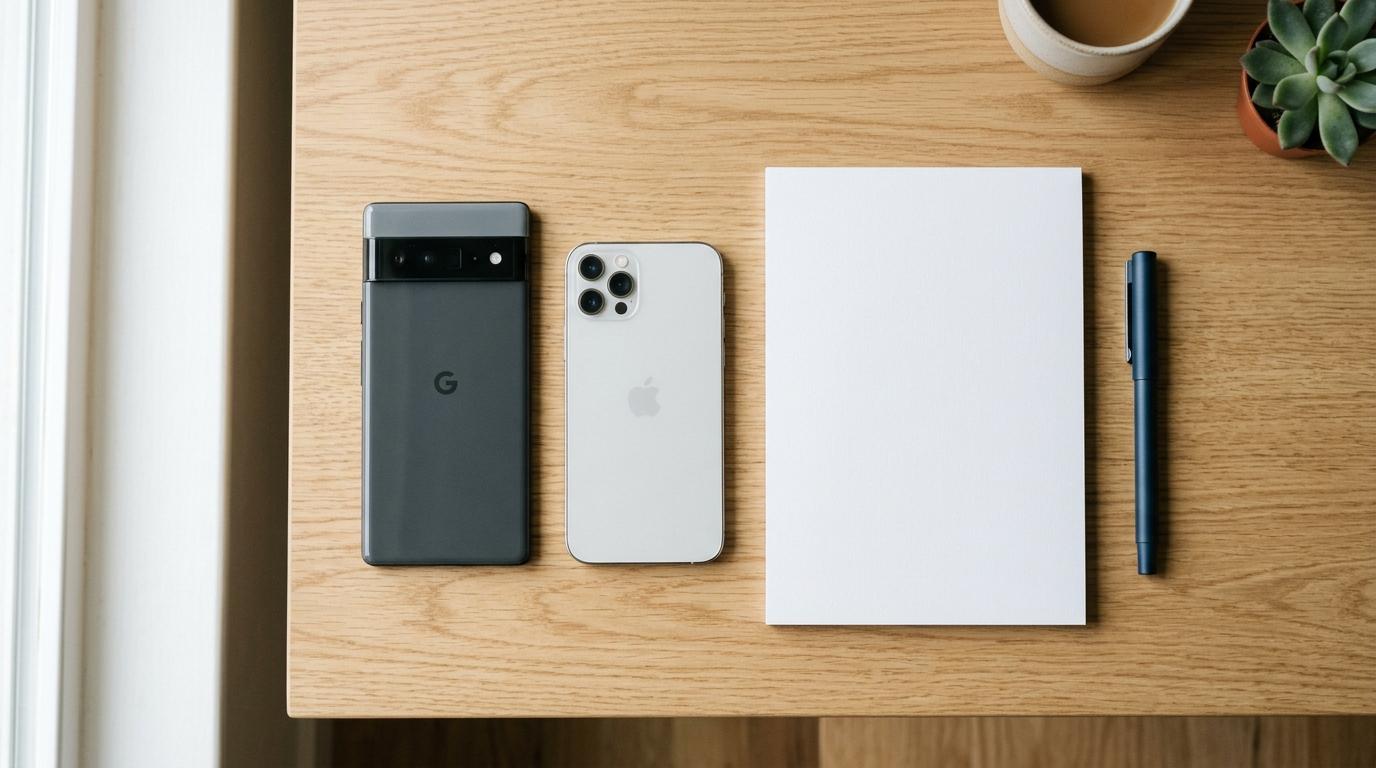
Be honest about the split. The native app is genuinely fine for a corner shop messaging 50 regulars who all saved the number. The moment you cross into campaign territory, real volume, new leads, personalization, and measurement, the manual path costs you more in lost reach and lost hours than any subscription.
| Capability | WhatsApp app (native) | Blueticks (own number) |
|---|---|---|
| Recipients per send | 256 per broadcast list | No 256 cap |
| Reaches non-savers | No | Yes |
| Personalization | Manual, one by one | Merge fields at scale |
| Scheduling | None | Set the send time |
| Pacing | None | Paced sends + send window |
| Reply & delivery tracking | None | Per-campaign tracking |
| Per-message fee | Free | No per-message fee |
Blueticks is an own-number tool, which means it works with your existing WhatsApp account instead of Meta's Cloud API. There is no business verification, no template-approval queue, and no per-message billing. It also means you operate at personal-account scale and pace, not enterprise throughput. If you are sending seasonal, marketing-heavy campaigns to a few thousand opted-in customers, that trade is almost always in your favor. If you need millions of transactional messages a month, the Cloud API is the right pipe, and its per-message pricing (billed per delivered message since Meta's July 1, 2025 pricing change, per respond.io) is the cost of that scale.
What no tool can do, including Blueticks, is guarantee delivery. WhatsApp controls that and can limit numbers that generate complaints. What a good tool removes is the manual grind: the five hand-built lists, the live send at 9am, the inbox you cannot measure. You bring the opt-in list and the offer. Run your first campaign free and send any of the nine templates above to your whole list in minutes.
FAQ
What is a good example of a WhatsApp promotional campaign? A flash sale is the clearest example: a single message with a specific discount, a deadline in the first line, one link, and a "last hours" reminder before it ends. Abandoned-cart nudges and back-in-stock alerts are the highest-converting examples, because they reach people with existing intent at the exact moment it matters.
How many people can I send a WhatsApp promotional campaign to? The native broadcast list caps each list at 256 contacts, and only reaches people who saved your number. With an own-number campaign tool like Blueticks, there is no 256 cap and recipients do not need to have saved you, because each message sends as a normal personalized message from your own number. Send only to opted-in contacts regardless of the tool.
What is the best time to send a WhatsApp promotional message? It depends on the campaign. Flash sales work best with a morning opener and a reminder a few hours before the deadline. Cart-recovery nudges convert best one hour after abandonment while intent is hot. Event reminders land hardest one hour before the event. Match the timing to the intent, not to a universal "best hour."
How do I stop my number getting banned when sending a promotional campaign? Message only opted-in people, personalize every send, pace sends over minutes instead of seconds, start with a small batch before scaling, and honor opt-outs instantly. Meta's policy enforcement limits or removes accounts that generate excessive negative feedback, so keeping your report rate low by messaging people who expect you is the whole game.
Do I need the WhatsApp Business API to run promotional campaigns? No. The Cloud API suits very high volume and transactional messaging at enterprise scale, but it bills per delivered message and requires business verification and template approvals. For seasonal campaigns to a few thousand opted-in customers, an own-number tool sends from your existing number with no per-message fee and no approval queue, which is usually cheaper and faster to start.