

How to Build a WhatsApp Drip Sequence That Converts (2026 Guide)
A broadcast is one shot. A drip sequence is a system that follows up automatically. Here's how to build a WhatsApp drip sequence that converts in 2026 — triggers, timing, and the platform rules you can't ignore.
Maya Cohen10 min read

On this page
- What is a WhatsApp drip sequence (and how is it different from a broadcast)?
- What types of WhatsApp drip sequences actually work?
- How do you set up a WhatsApp automated follow-up sequence step by step?
- How many messages should a WhatsApp nurture sequence have — and how far apart?
- How do you build a WhatsApp onboarding sequence for new customers?
- What metrics tell you if your WhatsApp drip sequence is working?
- App vs API vs tool: what can actually run a drip?
- FAQ
You captured a lead. They replied once, asked a price, then went quiet. You meant to follow up. You didn't. Three days later the deal was cold, and you have forty more leads in exactly the same state.
That is the problem a WhatsApp drip sequence solves. Instead of you remembering to chase every contact at the right moment, a pre-built series of timed messages does it for you. This guide walks the whole build for 2026: what a drip sequence actually is, the types that convert, how to set one up step by step, how many messages to send and how far apart, and the platform rules that decide whether your messages arrive at all. We'll be honest about what's possible on the free Business app versus the API versus a tool like Blueticks, because that distinction changes everything.
What is a WhatsApp drip sequence (and how is it different from a broadcast)?
A WhatsApp drip sequence is a pre-built series of messages sent to one person automatically, spaced over time or triggered by an action like a signup or a purchase. A broadcast is a single message sent to many people at once. The drip follows the individual; the broadcast hits the crowd. That difference is why a whatsapp automated follow up converts where a one-off blast stalls.
Think of it as the difference between a megaphone and a conversation. A broadcast is the megaphone: same message, same second, everyone on the list. A drip sequence, also called a whatsapp follow up sequence or whatsapp nurture sequence, is closer to a smart assistant who messages each new lead on day 0, checks back on day 2, and sends a final nudge on day 5, without you touching anything.
The mechanics behind that are simple. Each message in a drip has a trigger (a signup, an abandoned cart, a date) and a delay (an hour, a day, a week). The trigger fires, the clock starts, the next message sends. Your job is to design the sequence once. After that it runs on its own for every contact who enters it.
Here's the practical split:
| Broadcast | Drip sequence | |
|---|---|---|
| Audience | Many people, one send | One person, many sends over time |
| Trigger | You hit send | An action or a time delay |
| Goal | Announce, promote | Nurture, follow up, convert |
| Effort per contact | Manual every time | Build once, runs forever |
| Typical use | Flash sale, new launch | Onboarding, lead nurturing, cart recovery |
Broadcasts still have their place. For the full broadcast workflow, including segmentation and compliant sends, see our guide on WhatsApp campaign management. This article is about the other half: the automated follow-up that runs while you sleep.
What types of WhatsApp drip sequences actually work?
The WhatsApp drip sequences that consistently convert are tied to a clear trigger and a clear next step: lead nurturing after a form fill, abandoned-cart recovery, post-purchase onboarding, win-back for dormant contacts, and event or appointment reminders. Each one catches the contact at a moment of intent and walks them to the next action, instead of hoping a single message lands at the right second.
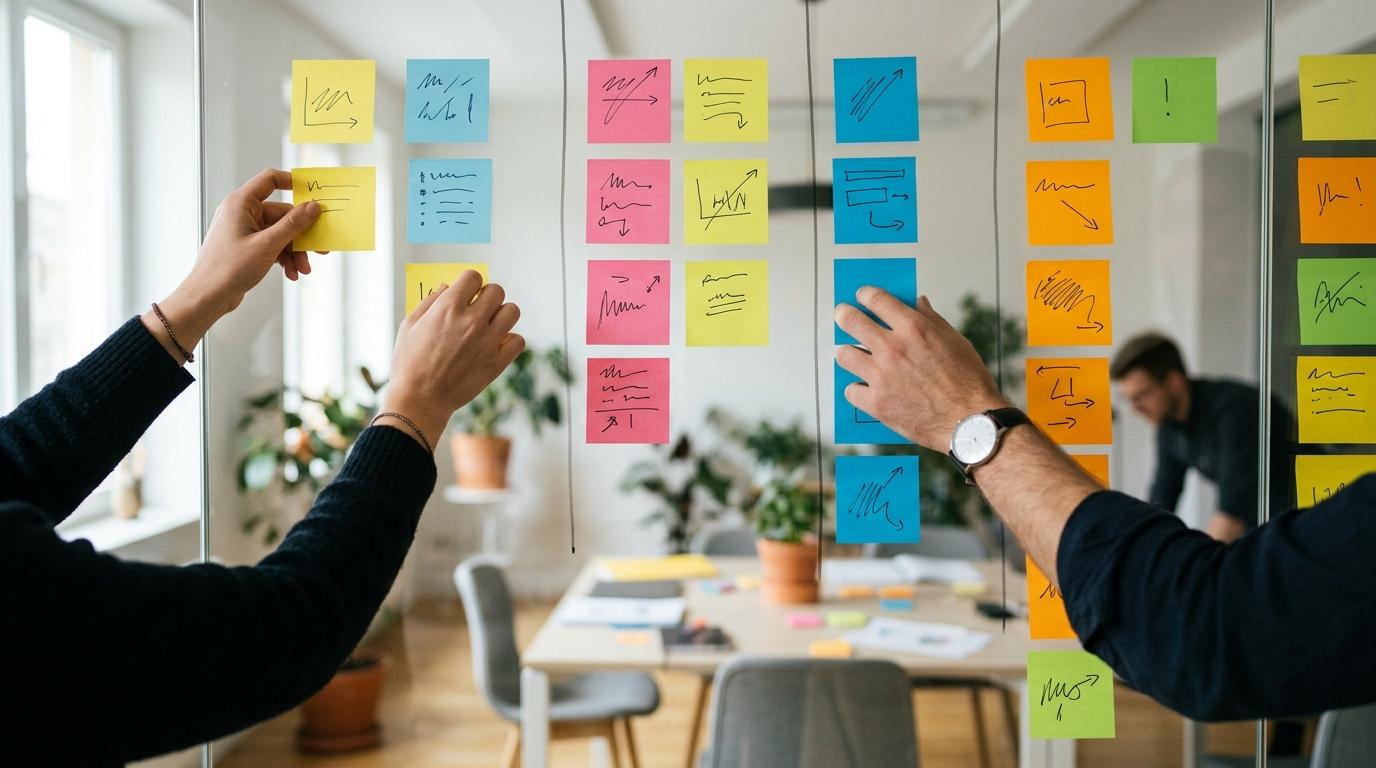
Five sequences earn their keep:
- Lead nurturing. Someone fills a form or replies to an ad. A 3-touch whatsapp lead nurturing sequence introduces you, answers the obvious objection, then asks for the call or the order. Most B2B leads need more than one touch before they buy, and a sequence is how you deliver those touches without a human chasing each one.
- Abandoned-cart recovery. The contact added to cart and left. A reminder within the hour, an incentive a day later, a final scarcity nudge after three days. WhatsApp is a strong recovery channel because the message lands in a thread the customer already reads.
- Post-purchase onboarding. New customer, new sequence. Welcome, setup tip, then a check-in. This is where you reduce refunds and earn the second purchase.
- Win-back. Dormant 90-plus days. One honest re-engagement message beats fourteen more flash-sale alerts they've already learned to ignore.
- Reminders. Appointment, webinar, renewal. A confirmation, a 24-hour reminder, a 1-hour heads-up. This sequence alone can cut no-shows hard.
The common thread: every one of these is a reply-or-action moment, not a cold blast. That's why drip beats broadcast on conversion. The sequence is built around what the contact just did.
One honest caveat before you build any of these. True automated drips need a real scheduler. The free WhatsApp Business app has greeting messages and quick replies, but no native sequencer that fires message 2 a day after message 1. For genuine sequencing you need the WhatsApp Cloud API, or a tool that schedules sends for you. More on that split below.
How do you set up a WhatsApp automated follow-up sequence step by step?
Set up a WhatsApp automated follow-up sequence in five steps: confirm opt-in, pick a single trigger, map 3 to 4 timed messages, write each one to drive a specific action, then schedule the delays so the sequence runs without manual sends. Lock the opt-in first. Without documented consent, the rest of the sequence is a compliance problem, not a marketing one.

Here's the working build:
- Confirm opt-in. Every contact in the sequence needs an explicit, recorded opt-in: your business name, WhatsApp named as the channel, the message types, and an opt-out path. A pre-checked box doesn't count. If your front-of-funnel consent is shaky, fix it first with our WhatsApp opt-in collection guide.
- Pick one trigger. Signup, purchase, cart abandonment, or a calendar date. One trigger per sequence keeps the logic clean. "When someone fills the demo form" is a trigger. "When it feels right" is not.
- Map the touches. Write down each message and its delay before you draft a word. A lead-nurture spine might be: Touch 1 immediately, Touch 2 at 48 hours, Touch 3 at day 5. Mapping first stops you from improvising a seven-message marathon nobody wants.
- Write each message to one action. Every touch has a single job: book the call, claim the code, reply with a question. One message, one ask. For copy you can lift, our WhatsApp campaign templates that convert library covers cart recovery, win-back, and reminder copy with timing.
- Schedule the delays. Set the trigger, set each delay, and let it run. This is the step the free app can't do on its own. Blueticks handles recurring and timed sends from your WhatsApp account, so the 1-hour, 48-hour, and day-5 touches fire on schedule without anyone clicking send at midnight.
A note on the 24-hour window, because it governs how you build. When a contact messages you, you can send free-form replies for 24 hours after their last message, per the WhatsApp Business Platform docs. Outside that window, on the API you can only send an approved template. So a sequence that follows a customer's inbound reply can run free-form inside 24 hours; a sequence that reaches out cold, days later, needs an approved marketing or utility template. Design your delays with that line in mind.
How many messages should a WhatsApp nurture sequence have — and how far apart?
A WhatsApp nurture sequence should run 3 to 5 messages spaced over 5 to 14 days for most use cases. Front-load value, widen the gaps as you go, and stop the moment the contact converts. Fewer, well-timed touches beat a long drip, because WhatsApp caps how much marketing any one person receives, and over-sending triggers blocks that hurt your deliverability.
There's no universal number, but the failure modes are predictable. Two messages is usually too few to overcome inertia. Eight is too many and starts earning blocks. The sweet spot for a whatsapp nurture sequence sits between three and five, with the cadence matched to the use case:
| Sequence type | Messages | Spacing |
|---|---|---|
| Abandoned cart | 3 | 1 hour, 24 hours, 72 hours |
| Lead nurturing | 3 to 4 | Day 0, day 2, day 5, day 9 |
| Post-purchase onboarding | 3 to 5 | Day 0, day 1, day 7, day 14, day 30 |
| Win-back | 2 to 3 | Day 0, day 3, day 7 |
| Event reminder | 3 | At booking, 24 hours before, 1 hour before |
Two platform rules cap your enthusiasm, and you have to respect both. First, the 24-hour customer-service window: outside it, marketing or utility outreach needs an approved template, so a long drip of cold free-form messages simply won't send on the API. Second, Meta limits how many marketing template messages a single user receives per day across all businesses combined, returning error 131049 when a user is saturated (Meta's per-user marketing template limits). Widely reported as roughly two marketing messages per user per day, the exact ceiling is dynamic and personalized by Meta, not a fixed public number, so don't plan around a specific figure. Plan around the principle: send fewer, more relevant touches.
"We cut our nurture from seven messages to four and conversions went up. The extra three messages weren't nurturing anyone. They were training people to mute us." (Synthetic operator quote, representative of the over-sending pattern these limits exist to curb.)
The rule of thumb: each message should earn the next one. If touch 2 adds nothing touch 1 didn't, cut it.
How do you build a WhatsApp onboarding sequence for new customers?
Build a WhatsApp onboarding sequence by triggering it on the purchase or signup, then sending 3 to 5 messages over the first 30 days: a same-day welcome, a day-1 setup nudge, a day-7 check-in, and a day-30 next-step or upsell. The goal is activation, not selling. A customer who reaches their first win early refunds less and buys again.
A worked example. Take a fictional skincare subscription brand, call them Lumen Skincare. They sold well but churned hard: customers bought one box, never set up the routine, and cancelled by month two. They built a five-touch onboarding drip on the purchase trigger:
- Day 0, welcome. Order confirmed, what arrives when, one line on how to start. No selling.
- Day 1, setup. "Your kit ships tomorrow. Here's the 2-minute routine that makes it work." Pure value.
- Day 7, check-in. "How's week one? Reply if anything's unclear." This message opens a 24-hour window every time someone replies, which lets support answer free-form.
- Day 14, social proof. A short result story from a similar customer.
- Day 30, next step. The upsell or the resubscribe nudge, timed to when the first box runs low.
The numbers Lumen reported afterward, illustrative but within plausible ranges for this kind of activation work: the day-7 check-in pulled a 38% reply rate, month-two retention rose noticeably, and the day-30 upsell landed because it arrived exactly when the product ran out, not on an arbitrary calendar date. (Synthetic example; treat the figures as directional, not a guarantee.)
The mechanic that makes onboarding sequences special: the check-in messages are reply-bait by design. Every reply opens the 24-hour service window, so your support team can answer free-form without burning a template. That turns a one-way drip into a two-way relationship. To keep all five touches firing on schedule across every new customer, Blueticks's scheduler runs the timed sends from your WhatsApp account, so day 7 and day 30 don't depend on anyone remembering.
What metrics tell you if your WhatsApp drip sequence is working?
The metrics that matter for a WhatsApp drip sequence are delivery rate, reply rate, per-step drop-off, conversion rate, and block or unsubscribe rate. Skip open rate as a comparison metric: WhatsApp opens run near-universal, so they can't separate a good sequence from a bad one. Watch where contacts fall out of the sequence and what share take the final action.

Because almost every WhatsApp message gets opened, the open rate is a vanity number here. The signal lives downstream. Track these per step, not just per sequence:
| Metric | What it tells you |
|---|---|
| Delivery rate | List quality and template/cap issues. A drop means blocks or saturation |
| Reply rate per step | Which message actually engages, and which is dead weight |
| Step drop-off | Where contacts go quiet, so you can cut or rewrite that touch |
| Conversion rate | The money metric: who took the final action |
| Block / unsubscribe rate | Your early warning. Climbing block rate means you're over-sending |
The per-step view is what separates a tuned sequence from a guessed one. If touch 3 has the same reply rate whether you send it or not, it's noise. If 40% of contacts drop after touch 2, that message is the leak. Fix the leak before you add more messages.
One number to anchor on: your block and unsubscribe rate. Keep it low. A rising block rate doesn't just lose contacts, it drags your quality rating, which throttles delivery for everyone else in the sequence. If a sequence converts at 6% but blocks at 4%, it's quietly poisoning your account. The best whatsapp sequence tool ties each send to its outcome so you can see this without a spreadsheet. For the full analytics breakdown including revenue per recipient, see our WhatsApp campaign management guide.
App vs API vs tool: what can actually run a drip?
Be clear-eyed about where you build. The free WhatsApp Business app gives you a greeting message and quick replies, but no true sequencer: it can't fire message 2 forty-eight hours after message 1 on its own. The WhatsApp Cloud API can run full automated sequences, but it's a raw HTTP interface with no built-in campaign builder, so you're either coding it or paying a provider. A WhatsApp sequence tool sits in the middle: for smaller lists, it schedules timed and recurring sends from your existing WhatsApp account without an API integration.
| Option | Native drip automation? | Best for |
|---|---|---|
| WhatsApp Business app | No native sequencer | Manual replies, tiny operations |
| WhatsApp Cloud API | Yes, but build-it-yourself | High volume, dev resources, CRM integration |
| Scheduling tool (e.g. Blueticks) | Yes, scheduled timed sends | Smaller lists, no-code, runs from WhatsApp Web |
Match the tool to your scale. A team nurturing a few hundred leads a month doesn't need a full API stack and the developer time that comes with it. A high-volume operation sending tens of thousands of templates a day does. Overbuilding costs money and time you won't get back; underbuilding means you're back to forgetting follow-ups.
If you're running smaller, opted-in lists and want sequences without standing up an API integration, Blueticks runs directly in your browser on WhatsApp Web. Map your triggers and delays once, and the sequence runs on schedule. Install the Chrome extension and build your first follow-up sequence in under ten minutes.
FAQ
What is a WhatsApp drip sequence? A WhatsApp drip sequence is a pre-built series of messages sent to one contact automatically, spaced by time or triggered by an action like a signup or purchase. Unlike a broadcast, which sends one message to many people at once, a drip follows the individual: message 1 on day 0, message 2 two days later, and so on. It's how you deliver consistent follow-up at scale without chasing each lead by hand. Common types include lead nurturing, abandoned-cart recovery, onboarding, and win-back.
Can I send automated WhatsApp sequences from the free Business app? Not really. The free WhatsApp Business app offers greeting messages, away messages, and quick replies, but it has no native scheduler that fires a follow-up message a day or a week later on its own. For genuine automated sequencing you need the WhatsApp Cloud API, which can run full drips but requires development work, or a scheduling tool like Blueticks that handles timed and recurring sends from your existing WhatsApp account for smaller lists without an API integration.
How many messages should a WhatsApp follow-up sequence have? For most use cases, 3 to 5 messages spaced over 5 to 14 days. Abandoned-cart sequences run tighter (1 hour, 24 hours, 72 hours); onboarding sequences stretch across 30 days. Front-load the value and widen the gaps as you go. Don't over-send: Meta limits how many marketing template messages a single user receives per day across all businesses combined, so a long drip can fail to deliver and rising block rates hurt your quality rating.
Do I have to use approved templates for a WhatsApp drip sequence? It depends on timing. When a contact messages you, you can send free-form replies for 24 hours after their last message. Inside that window, sequence messages don't need a template. Outside it, on the WhatsApp Business API, you can only send approved marketing, utility, or authentication templates. So a sequence that follows a customer's reply can run free-form within 24 hours, while cold outreach days later needs an approved template. Build your delays with that 24-hour line in mind.
Why aren't my WhatsApp sequence messages being delivered? Three common causes in 2026. First, the recipient is a US (+1) number: Meta paused marketing template messages to US numbers starting April 1, 2025, and the pause is still in effect, so marketing simply doesn't arrive. Second, the user hit Meta's per-user marketing message cap (error 131049) after receiving too many marketing templates that day across all businesses. Third, your list includes non-opted-in contacts dragging down your quality rating. Segment out US contacts for marketing, respect the cap, and clean your list.
Benchmark and policy note: the 24-hour customer-service window, the per-user marketing template cap (error 131049), the US marketing pause (effective April 1, 2025), and per-message billing trace to Meta's WhatsApp Business Platform documentation and the WhatsApp Business Messaging Policy. Reply, conversion, and retention figures in the worked examples are illustrative ranges, not guarantees; your results vary by list quality, offer, and market.